Essays
April 17, 2026
Why Poetry and the Arts Matter
Some mornings I walk to the edge of the native prairie I tend behind my house in Appleton, Wisconsin, and simply stand there. The grasses move in the wind. A red-winged blackbird calls from somewhere along Mud Creek.
At other times, I settle into the Aldo Leopold bench in the prairie garden atop the hill that overlooks the creek. The view opens into layers of grasses, sedges, wildflowers, water, and trees shifting with the seasons. I have not done anything yet, have not written a word or solved anything, and already something in me has shifted.
This is where my poems begin, not in abstraction but in paying close attention to what is right in front of me.
Poetry is, at its core, an art of attention. A poem slows perception and asks both writer and reader to dwell with what might otherwise pass unnoticed, such as the angle of late light across a field, the smell of prairie grasses after rain, or the quiet weight of a grief that has not yet found words. Through language shaped with care, these experiences become visible in ways ordinary speech rarely accomplishes.
The arts matter because they deepen perception. Much of modern life encourages speed, distraction, and the fragmentation of attention. News cycles accelerate, digital platforms compress complex realities into brief signals, and daily obligations pull awareness in many directions at once. Art moves in the opposite direction. It slows the mind and invites sustained observation. When we read a poem or stand before a painting, we enter a space where noticing becomes the primary activity.
This kind of attention changes how we understand the world and how we understand one another. Through poetry we encounter emotions, landscapes, histories, and communities that may be entirely unfamiliar to us. A poem written centuries ago can reveal how people once understood love, loss, labor, or faith. Contemporary art can illuminate experiences shaped by culture, geography, or injustice that might otherwise remain outside our awareness. The arts extend the reach of empathy by allowing us to imagine lives other than our own.
Poetry also preserves memory. Long before written archives existed, poetry carried genealogies, ecological knowledge, and cultural values across generations. Even now, poems serve as vessels for memory, recording personal moments alongside collective histories. A poem can capture the atmosphere of a particular landscape or the emotional texture of a historical moment in ways that statistics alone cannot convey. When I write about cranes skimming the river near my home, I am not only writing about birds. I am writing about what it means to witness something still wild in a world that keeps narrowing its margins for wildness.
The arts also offer language for complexity. Much of human experience resists simple explanation. Grief is rarely linear. Joy often arrives alongside uncertainty. Questions of justice, belonging, and history rarely yield tidy answers. Poetry provides a form that can hold these realities through metaphor, rhythm, and image while allowing meaning to emerge gradually through reflection. My own work has always lived in that tension between the personal and the political, between the intimate detail and the larger moral question it opens.
The arts play a civic role that I take seriously. Throughout history, poets, musicians, playwrights, and visual artists have questioned injustice, challenged systems of power, and illuminated the lived consequences of inequality. Artistic expression can reveal the human realities that lie beneath policy debates and public rhetoric. Art rarely produces immediate solutions, but it can shift awareness, and shifts in awareness often precede shifts in action.
Art also builds community. Shared encounters with poetry, theater, music, and visual art create spaces where people gather around common experiences of reflection and meaning. These encounters allow individuals from different backgrounds to engage with one another through imagination and dialogue rather than through conflict alone. The arts cultivate curiosity about the world beyond our own immediate lives.
I come back, always, to that prairie behind my house. To deer moving through the brush. To the crocus that pushes through the soil in its own time. These are not merely beautiful things. They are teachers. They remind me that to notice carefully is already to participate in the life of the world.
Poetry transforms that attention into language. It allows us to reflect, to remember, and sometimes to imagine different possibilities for how we might live with one another and with the landscapes that sustain us. That is why the arts endure. Not because they are decorative, but because they are necessary.
April 15, 2026
Changes in Seasonal Patterns in the Midwest: What I Notice as a Writer in Wisconsin
I was born and raised in Wisconsin and still live in Appleton, within the greater Fox Cities area, the same landscape of weather, land, and time that shaped my earliest sense of place. A native prairie garden up the hill from Mud Creek is part of daily life, a certified wildlife habitat shaped by prairie plantings, pines and deciduous trees, shrubs, and dense understory that supports deer, wild turkeys, songbirds, woodchucks, raccoons, possums, and the occasional fox. Indoors, houseplants carry a quieter continuity through winter, and two rescue cats, each marked by a clipped ear from Trap-Neuter-Release, move through the rooms as part of the same extended ecology of attention.
Gardening here has never felt like a project so much as a long relationship with soil and season, marked by repetition that is never entirely identical. Things return, but they do not return in the same way twice. It is often in those small deviations in timing, texture, or sound that change first becomes visible.
Once, in late February, a brief thaw softened the creek banks and brought robins into the wet edges of the yard. The creek began to sing again, water loosening over ice, a thin continuous hiss moving through frozen ground, only for a sharp cold to return days later and freeze everything back into place. That sequence, arrival, interruption, return, remains one of the clearest ways I understand what is happening at larger scales, where timing itself feels less stable than it once appeared.
Seasons in this place are lived intervals rather than abstractions. Winter taught duration through presence as much as cold, shaping how long one is willing to remain within stillness. Spring arrived like a bodily release, felt in air and soil before it could be named, when the creek begins to loosen and sound returns at the edges of silence. Summer came dense with heat, growth, and accumulation, everything expanding faster than it can comfortably be followed. Autumn once felt almost instructive, as though the landscape were making visible a process already underway.
What has become harder to ignore is how those intervals now feel less predictable in their boundaries and transitions, not because they have disappeared, but because their timing no longer aligns with memory or expectation. The shift appears first in ordinary places: soil that no longer holds winter’s firmness as long as it once did, creek edges where thaw arrives earlier or lingers longer than it used to, and the timing of frogs, birds, and insects that still return but not always in the sequences remembered from earlier years.
Regional climate records and ecological studies across the Upper Midwest describe rising average temperatures and increasing variability in freeze–thaw cycles. Those descriptions name what appears here in smaller and more immediate ways: timing that slips slightly out of phase, seasonal cues arriving earlier or later than expected, and a quiet mismatch between what is happening and what memory anticipates. Nothing is absent; what changes is alignment.
Winter still arrives, and it remains a season that asks for a different kind of attention, narrower and more interior, where the landscape is not empty but reorganized around constraint. Sound shifts in quality rather than volume. Distance becomes harder to judge. What is visible is only part of what continues beneath the surface.
Even within that continuity, variation has become more noticeable. Sustained cold is followed by unexpected thaws. Ground conditions shift earlier than expected. Cold returns after thought has already begun to move toward spring. Winter remains itself, but its edges feel less fixed, as though the season is expressing a wider range of timing than it once did.
Spring, too, has become less synchronized. In prairie plantings and garden beds, emergence follows moisture and temperature patterns that are increasingly difficult to anticipate in advance. Frogs, early insects, and returning birds still arrive, but not always in the order or density that once made spring feel like a single unfolding event. What becomes necessary is not only recognition, but sustained relation, since coherence is no longer something assumed in advance but something perceived as it forms.
Summer still arrives with its familiar density of heat, sound, and growth, and much of it is spent in the garden in the early hours, when light feels soft enough to receive rather than resist. Vegetables and native flowering plants grow in layered proximity, and pollinators such as bees and monarch butterflies still move through these spaces, though their presence now registers less as stable background and more as something that varies across weeks and years. There are days when abundance is immediate, and others when absence arrives first, before explanation can follow. The tomatoes, in particular, receive more attention than logic would recommend, less as belief than as companionship.
Autumn remains the most legible season, even as its timing has become less uniform. It continues to reveal itself through change, through the gradual withdrawal of green and the shifting of color and light across trees and ground, though these changes no longer always arrive in coordinated waves. Still, the overall movement of the season remains readable, even when its internal rhythm is less predictable than it once was.
What continues to feel steady is the land’s underlying movement. The creek still flows. The prairie still returns. Birds still migrate. Soil continues its cycles in ways that predate and exceed any attempt to describe them. Time in the garden is still marked less by abstraction than by return, by what reappears and what does not, and by the increasingly careful work of noticing differences small enough to be missed without sustained attention.
This is not experienced as loss so much as a shift in how relationship itself is lived. The seasons remain present. The observer remains present. What shifts is the space between them, which has become more porous and less predictable, requiring a form of noticing that does not rely on memory alone but on continued engagement with what is actually unfolding.
Attention returns, again and again, not to confirm what is already known, but to meet what is present as it continues to change.
— Jean Kiernan Detjen
© 2026 Jean Kiernan Detjen. All rights reserved.
April 14, 2026
The Ecology of Attention: What the Algorithm Cannot See
There’s a kind of attention that builds the world, and a kind that only reflects it back. One is slow, continuous, and cumulative. It’s the attention that shapes language, relationship, and meaning over time… the kind required to notice how a river changes course after spring runoff, or how a thought becomes a pattern only after it’s returned enough times to be recognized as one. The other is instantaneous, reactive, and extracted. It’s designed to register intensity rather than depth, to measure engagement rather than understanding, and to respond to interruption more readily than coherence.
We’re increasingly asked to live inside the second form while treating it as if it were neutral. It isn’t. It has an ecology, and like any ecology, it determines what can survive.
Attention is a limited, embodied act. To attend to something is to withhold attention from something else. It requires selection, and selection implies responsibility. Nothing can be seen all at once, and so seeing becomes a form of care. In older forms of writing and reading, attention was slow enough to accumulate meaning. A reader stayed with a text long enough for its internal logic to unfold. A writer assumed continuity on the other side of the page. This form of attention isn’t gone, but it’s been displaced. Not replaced. Displaced. The distinction matters.
The contemporary attention economy is built on systems that optimize for interruption. These systems don’t value continuity; they treat it as inefficiency. What performs best is what produces reaction: immediacy over reflection, novelty over development, emotional spike over sustained inquiry. The result is a subtle but persistent distortion in perception. Visibility becomes confused with significance. What’s seen most is assumed to matter most. Yet visibility isn’t meaning. It’s exposure under specific conditions. The system doesn’t ask what a work becomes over time. It asks what it can extract from it now.
Ecology isn’t only a metaphor drawn from nature. It’s a description of relations that unfold over time. A forest isn’t a collection of trees. It’s a system of dependencies, feedback loops, and slow transformations that can’t be understood from any single moment in isolation. Attention works the same way. When it’s fragmented, meaning doesn’t disappear because people lack depth. It disappears because depth requires continuity. Without continuity, interpretation collapses into reaction. We mistake intensity for insight, and accumulation for understanding.
Writing depends on sustained attention. It requires staying in one place long enough for something to emerge. It’s one of the few remaining practices that insists on continuity rather than interruption. Yet writing now exists inside systems that don’t share its assumptions. A poem isn’t optimized for engagement. An essay isn’t structured for immediacy. A sustained argument often receives less visibility than a fragment designed to trigger reaction. The asymmetry is structural: what’s most meaningful is often least rewarded by systems of distribution, and what’s most rewarded is often least able to carry meaning over time.
We describe these systems as neutral tools, but attention systems are no more neutral than irrigation systems. They determine what grows and what withers. They distribute nourishment unevenly. The question isn’t whether attention is being shaped, but what form it’s being shaped into, and whose needs that form serves.
There are forms of attention that resist translation into metrics. Standing in a field and noticing the exact moment the light shifts. Returning to a paragraph until it becomes legible not only intellectually but physically. Listening long enough for a voice to change in perception. These aren’t optimized experiences. They’re sustained ones. They produce understanding that accumulates rather than spikes.
Not all visibility is equal. Some forms of being seen flatten meaning into surface. Others deepen it through recognition over time. There’s also a form of attention that happens outside systems of distribution entirely, between a work and its reader, slow and unmeasured. The work of writing, and maybe the work of living with attention intact, is to choose which forms of visibility we participate in. Not to reject systems entirely, but to refuse their claim to totality. The algorithm can’t see continuity, but continuity persists without needing to be seen.
There’s still a kind of attention that doesn’t move quickly. It returns. It revisits. It deepens rather than disperses. It doesn’t announce itself as relevance. It becomes relevance over time.
And that difference—between what flashes and what remains—is where meaning continues to live.
— Jean Kiernan Detjen
© 2026 Jean Kiernan Detjen. All rights reserved.
March 19, 2026
THE PATTERN HAS A NAME
From Cesar Chavez to Jeffrey Epstein to #MeToo: What We Keep Refusing to See
I have been sitting with the Cesar Chavez revelations all week. As a poet, a journalist, and a woman who has spent years studying how dominator culture operates, I needed to write about it. Not just about him. About the system. About all of it. This is what I needed to say.
There is a particular grief that comes when a hero falls. Not the clean grief of loss, but something murkier, more corrosive. Something that asks you to hold two truths at once and find that they do not cancel each other out, only deepen the wound.
Cesar Chavez. The name was once a kind of prayer in certain communities. His face still watches from murals in California, in Arizona, in Texas. Patient, determined, the face of a man who believed that the powerless deserved dignity. And yet, according to a New York Times investigation published March 18, 2026, what was happening behind that face was this: the grooming and sexual abuse of two girls, daughters of organizers who trusted him with their families. The rape of Dolores Huerta, his own co-founder of the United Farm Workers, in a secluded grape field in Delano, California, in 1966.
Huerta is nearly 96 years old. She kept her silence for sixty years. She kept it, she says, because she feared the truth would destroy the movement she had given everything to build. Let us sit with that for a moment. One of the great women of American labor history, raped, silenced by the logic of the very movement she helped create, forced to carry that secret through decades of struggle and witness and hard-won change.
I am not surprised. That is the most important thing I can tell you. I am heartbroken, and I am not surprised. Because this is not a story about one man. This is a story about a system. And the system has a name.
DOMINATION IS NOT A METAPHOR
The scholar Riane Eisler, whose work I return to again and again as a compass, spent her life mapping the deep grammar of human civilization. In The Chalice and the Blade, and across decades of scholarship, she identified two organizing principles at the heart of every society: the dominator model, built on hierarchy, force, and the ranking of human beings; and the partnership model, built on mutual respect, shared power, and the linking rather than the ranking of people.
Dominator culture is not only an economic arrangement or a political one. It is a bodily one. It creates the conditions in which rape flourishes. It cultivates the entitlement of men who have been taught, by culture, by institution, by silence, that power over others is a right they have earned. It enforces the silence of women who understand, with a clarity born of survival, that the system will not protect them. These are not accidents of individual character. They are predictable outputs of a structure.
This is not a metaphor. It is not abstract theory. It is what happened to those two girls in the 1970s. It is what happened to Dolores Huerta in a parked car in a grape field. It is what happened to the hundreds of women and girls who came forward during #MeToo. It is what happened to the survivors of Jeffrey Epstein. According to a February 2026 investigation by journalist Lindsey Blumell published in The Conversation, six Epstein survivors reported that the Department of Justice had not contacted them during its review of the files, even as 3.5 million pages were released to the public. The Department also exposed survivors' personal information in those documents. The system, again, protected itself.
The same root. The same logic. The same silence.
THE ORCHARD, NOT THE APPLE
We have a habit, when these stories break, of reaching for the language of aberration. A bad apple. A monster among men. A tragic fall from grace. This language is comfortable because it contains the damage, quarantines it, and leaves the larger order intact.
But #MeToo did not reveal a collection of bad apples. It revealed an orchard. Harvey Weinstein. Bill Cosby. Larry Nassar. Matt Lauer. Les Moonves. Russell Simmons. Name after name after name across entertainment, media, politics, religion, academia, sports, technology. In nearly every case, surrounding each abuser, there was an ecosystem: assistants who knew, lawyers who protected, colleagues who heard rumors and chose institutional loyalty, organizations that shuffled perpetrators sideways rather than out.
That ecosystem is not accidental. It is the dominator system maintaining itself. It is what Eisler meant when she described hierarchy enforced by the threat of pain: not only physical pain, but the pain of professional ruin, social exile, disbelief. The victims of Epstein knew this. Maria Farmer reported his crimes to the FBI in 1996. The FBI failed to investigate. By 2008, a victims' rights attorney called Epstein potentially the most dangerous sexual predator in U.S. history, before a federal judge. Epstein received a 13-month sentence at a minimum security facility, which he left 12 hours a day. The system did not fail. The system worked precisely as designed: it protected the powerful.
The tools of silencing are not always legal failures. Sometimes they are active instruments. Weinstein hired former intelligence operatives to surveil and intimidate accusers. He used non-disclosure agreements as weapons. His brother, his production company, and high-profile lawyers spent enormous sums to bury what was known. R. Kelly's victims were threatened. Bill Cosby's were disbelieved for decades. The three high-end real estate brokers just convicted of serial rape in New York City had accusers who were persecuted for speaking. Dominator culture does not only fail to protect survivors. It is often actively organized against them.
THE SCOPE OF IT
If there is any remaining doubt that this is systemic and not exceptional, consider the numbers.
Globally, nearly 1 in 3 women, approximately 840 million, have experienced physical or sexual intimate partner violence, or non-partner sexual violence, in their lifetime. That figure comes from a landmark November 2025 report by the World Health Organization and six United Nations partner agencies. It is the most comprehensive study of its kind ever conducted. And here is what makes it most devastating: that number has barely changed since the year 2000. Twenty-five years of awareness, legislation, activism, and #MeToo, and the needle has moved almost imperceptibly, a 0.2 percent annual decline.
Over 370 million girls and women globally have experienced rape or sexual assault as children. In the United States, approximately 1 in 6 women has experienced attempted or completed rape. About 81 percent of American women report experiencing some form of sexual harassment or assault in their lifetime. One in 9 girls in the U.S. experiences sexual abuse or assault before the age of 18. One in three female victims of completed or attempted rape experienced it for the first time between the ages of 11 and 17.
The WHO report notes that these figures are almost certainly undercounts. Sexual violence is among the most under-reported crimes in the world, suppressed by stigma, fear of retaliation, and the reasonable expectation, confirmed by decades of evidence, that the system will not believe you.
To understand why, consider the system women were expected to report to. In some states before 1968, women were not permitted to serve on juries. The police, the courts, the justice system itself were run largely or exclusively by men, many of whom were abusers themselves. Women who reported rape were routinely put on trial for their own sexual history. The legal architecture was designed, whether by intention or indifference, to silence women and protect men. That is not ancient history. That is the world Dolores Huerta inhabited when she made the choice not to speak.
Consider what speaking up could cost. Marine Lance Corporal Maria Lauterbach, age twenty, was killed while waiting to testify that her higher-ranking colleague had raped her. Her body, pregnant, was found in a fire pit in his backyard. For anyone who wonders why survivors stay silent, there is your answer. Silence is not weakness. Silence is often the only rational response to a system built to punish those who speak.
These are not statistics. They are the aggregate weight of individual lives. They are the measure of what dominator culture costs, counted in bodies, in childhoods, in decades of silence.
WHAT HEROES COST US
There is a particular cruelty in the way dominator culture uses the myth of the great man as a shield. The greater a man's public moral authority, the thicker the wall of protection around his private crimes. Chavez fought for the dignity of the dispossessed, and that fight became the very reason Huerta could not speak. "I feared that no one within the union would believe me," she told the Times. She was right to fear it.
This is the double bind that dominator culture constructs for women: your silence protects the movement; your speech destroys it. And so women swallow decades of truth to keep something larger alive. And then we are surprised when the truth surfaces anyway, decades later, when the women are in their nineties and have nothing left to lose.
I think about the girls. The thirteen-year-old, groped in the union president's office. The fifteen-year-old, raped in a motel room in 1975. Daughters of organizers. Children who grew up in a world that asked them to be grateful for the movement their fathers built, even as the man at the movement's center was taking something from them that no movement can restore.
We can honor the farmworkers' struggle. We must. And we must also honor those girls, now women in their sixties, who were failed by the man their families trusted. Both things are true. That is not moral complexity. That is moral clarity.
THE RADIO SILENCE
When I share Eisler's framework with people, the dominator model, the partnership alternative, the deep cultural roots of violence, I often encounter what I can only call radio silence. Not disagreement. Not engagement. Silence.
I have come to understand that silence as a form of self-protection. Because if you truly take the dominator/partnership framework seriously, it does not allow you to simply condemn the obvious villains and move on. It asks you to look at every institution you belong to, every hierarchy you benefit from, every moment you chose silence over witness. That is uncomfortable territory. People stay silent for many reasons: fear of retaliation, institutional dependence, genuine uncertainty about what they witnessed. I do not flatten all of that into a single motive. But I do insist that the cumulative effect of that silence, whatever its individual sources, is the protection of the pattern. It is easier to treat each revelation as a discrete scandal, to be shocked, to demand accountability for this particular man, and then to wait for the next one.
But the next one always comes. Because we have not named the system. We have only named the men.
BEARING WITNESS
Virginia Giuffre, one of Epstein's survivors and one of the women who fought longest and loudest for accountability, died in 2025. Her memoir was published after her death. In it she wrote: "I know this is a lot to take in. The violence. The neglect. The bad decisions. The self-harm. Imagine if a trauma reel like this played in your head all the time, as it does mine... but please don't stop reading."
Please don't stop reading. Please don't look away. That is the ask: from Giuffre, from Huerta at 95, from the girls who were 13 and 15 in the 1970s and have waited decades for anyone to believe them.
As a poet, I believe in the power of naming. There is something older than law in the act of bearing witness, of standing before what is true and refusing to flinch. The pattern we are looking at across these stories, Chavez, Epstein, the hundreds of names #MeToo surfaced, is not mysterious. It is dominator culture doing what dominator culture does: using force and silence to protect those at the top of the hierarchy, at whatever cost to those below.
Eisler has spent her life articulating the alternative: a partnership culture where power flows not downward but outward, where the measure of a society is how it treats its most vulnerable, where the bodies of women and children are not territory to be claimed by those with authority over them. That culture is not a fantasy. It is a direction. A choice made repeatedly, in institutions and in households and in the moments when we decide whether to speak or be silent.
And it is a direction we have, in fact, moved. #MeToo was not a single moment but the crest of years of feminist work that changed what the public understood and what institutions could ignore. Prior to 2017, only three states had passed anti-harassment reforms. In the years that followed, 70 workplace anti-harassment laws passed across 40 U.S. states, with 3,000 pieces of related legislation introduced. In 2021, a federal law ended the forced arbitration of sexual assault and harassment claims, giving survivors the right to go to court. These are real changes. They are insufficient. And they are proof that naming the system works.
Dolores Huerta has finally spoken. The girls from the 1970s have finally spoken. Giuffre spent her short life speaking.
The least we can do, the very least, is listen. And then refuse the silence that has protected this pattern for far too long.
(This essay draws on a New York Times investigation published March 18, 2026; Dolores Huerta's own public statement released the same week; a February 2026 investigation by journalist Lindsey Blumell published in The Conversation; and data from the World Health Organization, UN Women, RAINN, and the National Sexual Violence Resource Center.)
WHAT WE TENDED
I was told the room was safe.
I believe that.
I do not believe that.
Someone's daughter is still happening
like a bruise that has not stopped forming.
We watered what we loved.
We were already inside what it became.
Continuity is not innocence.
It is what systems require
to keep moving.
There is a version of me
that calls it harm
and a version that calls it structure.
They do not reconcile.
They do not need to.
What she built was real.
What was done to her was real.
No seam holds them together cleanly.
I wanted heroes.
I did not want heroes.
One of these thoughts arrives
after the damage is already distributed.
We say: we knew.
We say: we did not know.
Both are held in the same weather
without agreeing on the season.
The vines are not metaphor.
The vines are not not metaphor.
I am present.
I am not present.
— Jean Kiernan Detjen
© 2026 Jean Kiernan Detjen. All rights reserved.
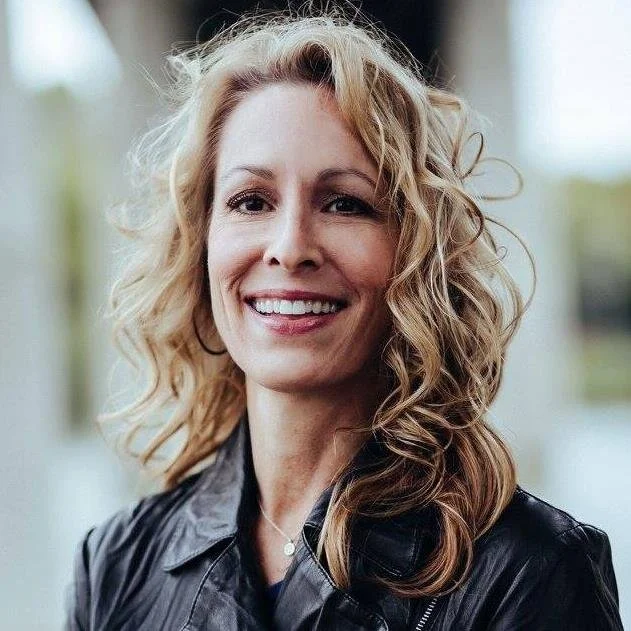
Before the Work 🌿
Attention does not move evenly. It settles first on what is visible, immediate, already shaped for recognition. What can be seen at a glance tends to arrive before what has been made through time, and what has been made through time does not always recover from that delay.
This is not only a condition of the present media landscape. It has a history, and that history is gendered. Misogyny does not always announce itself as refusal. More often, it operates as expectation: that women be legible first as presence, as body, as image, and only afterward, if at all, as makers of language.
The contemporary attention economy does not invent this sequence. It inherits it, refines it, and distributes it at scale.
What is framed as visibility is not neutral. It can be ambient, structurally rewarded, algorithmically reinforced in ways that present themselves as visibility rather than pressure. It shapes what is seen and what is overlooked. It organizes the conditions under which work is received.
The distortion is not visibility itself. It is sequence. When the image is asked to arrive before the work, and to stand in for it, something essential is displaced. The writer’s authority is replaced by presence. The writing becomes secondary to the figure attached to it.
What I trust most is still the writing: the sentence formed through attention, the line built through care, the slow unfolding of thought into language that does not ask to be seen before it is read. That trust is not innocence about the systems writers move inside. It is a refusal of their ordering logic.
— Jean Kiernan Detjen
© 2026 Jean Kiernan Detjen. All rights reserved.
Essays
April 2, 2026
PRICING OUT THE PROFESSIONS THAT HOLD AMERICA TOGETHER
Starting in July 2026, the federal government will implement significant changes to graduate student lending under the reckless One Big Beautiful Bill Act of 2025. The law eliminates Grad PLUS loans for new borrowers and caps federal graduate borrowing at $20,500 per year with a $100,000 lifetime limit. The change reads as technical. The consequences are immediate and systemic.
Many graduate programs that train essential professionals already exceed these limits. Degrees in nursing, social work, physical therapy, occupational therapy, speech-language pathology, education, counseling, public health, and physician assistant programs frequently cost well over $100,000. Graduate nursing programs range from roughly $35,000 to well over $100,000 for a Master of Science in Nursing. Programs at institutions such as Columbia University and Johns Hopkins University can exceed $140,000 in total costs. Doctor of Physical Therapy programs average between $108,000 and $126,000 in tuition before living expenses, according to the American Physical Therapy Association. The new federal borrowing cap will cover only a fraction of tuition and living expenses for many of these fields.
These are frontline careers. Nurses staff hospitals and clinics. Therapists help patients recover from injury and illness. Teachers and school counselors support students and families. Social workers and public health professionals respond to community health and social challenges. They sustain everyday life.
For many students, federal loans have historically made graduate training possible. Without them, the cost of entry will become harder to manage, particularly for students from working and middle-income backgrounds. Because many of these professions are disproportionately female and have long served as pathways into the middle class, limiting access to financing narrows opportunities for economic mobility in ways that fall unevenly across gender and class.
The structure of the policy reflects a hierarchy of expected earnings. Fields such as medicine and law retain borrowing pathways that more closely align with both the cost of training and potential future income. Many caregiving professions require advanced credentials while offering lower compensation. Borrowing limits that do not reflect these cost realities create unequal barriers to entry across professions that society depends on equally.
Supporters of graduate lending limits often argue that unlimited borrowing contributed to rising tuition, and that concern is not without merit. Analysts at institutions including the American Enterprise Institute and the Brookings Institution have examined how federal loan availability may influence pricing in higher education. Efforts to address cost inflation are reasonable. But abrupt borrowing caps restrict access before broader reforms to program costs or financing models are in place, and the students most likely to absorb the damage are those with the least margin.
When federal lending is constrained, students must rely more heavily on private loans or personal resources. Private lenders evaluate applicants based on credit history and expected earnings. That model favors borrowers entering higher-income professions or those with strong financial backing. Students pursuing careers in counseling, public health, education, or social work will find affordable financing simply out of reach.
The consequences extend beyond individual career decisions. The United States already faces workforce shortages across several care professions. The Bureau of Labor Statistics projects roughly 194,500 openings for registered nurses each year over the coming decade. Many regions also report shortages in mental health services, therapy professions, and special education. If fewer students can afford to enter graduate training programs, these gaps will widen, increasing caseloads, limiting access to care, and straining the systems communities rely on most.
This policy reflects a broader decision about which professional pathways remain financially accessible and to whom. If advanced training for caregiving professions becomes increasingly limited to students with substantial financial resources, the result is a narrower pipeline into fields that are anything but optional.
Policymakers have options. Federal lending authority could be directed toward programs that train professionals in high-need sectors. Scholarship and loan repayment programs could encourage service in shortage areas. Universities could be pressed to control costs and expand more affordable training pathways. Service-linked repayment programs administered through the U.S. Department of Education could help align workforce needs with financing structures. These are adjustments that take both fiscal discipline and public need seriously.
Nurses, teachers, therapists, and social workers are essential to the health, education, and stability of communities across the country. Ensuring that students from diverse backgrounds can still afford the training required to enter these professions is an investment in public well-being. Treating that access as optional is a choice, and one whose consequences we will all eventually feel.
Professions Most Affected by the New Loan Caps:
Nursing (RN-to-MSN, Nurse Practitioner, CRNA, Clinical Nurse Specialist, Midwifery)
Social Work (MSW and clinical tracks)
Physical Therapy (DPT)
Occupational Therapy (OTD)
Speech-Language Pathology (MS or MA)
Education (MEd, teaching licensure, school counseling)
Public Health (MPH)
Physician Assistant programs
Mental Health Counseling and Therapy
Public Administration and Community Leadership
Sources:
One Big Beautiful Bill Act of 2025, graduate loan provisions — Congress.gov
Implementation guidance from the U.S. Department of Education
Workforce projections from the Bureau of Labor Statistics
Doctor of Physical Therapy program cost data from the American Physical Therapy Association
Program cost data: Research.com, "How Much Does Nursing School Cost?" (2026); tuition schedules from Columbia University and Johns Hopkins University School of Nursing
Higher education lending analysis from the Brookings Institution and the American Enterprise Institute
— Jean Kiernan Detjen
© 2026 Jean Kiernan Detjen. All rights reserved.